Isolation was a solved problem in 2000, just not in the way the industry remembers it.
FreeBSD Jails were not stronger than everything that came after. They were coherent: one kernel-level boundary, designed as a boundary, and auditable as a single thing. Solaris Zones refined the same idea a few years later.
Then Linux containers took a different path.
Docker did not win because it was the purest isolation model. It won because it made containers usable. It gave developers a clean interface, a simple workflow, a good mental model, and a way to package and run software without caring too much about the machinery underneath. That mattered. Good developer experience beat a cleaner theory of isolation, and for the workloads of the time, that was mostly the right trade.
A service was usually predictable. It had a known filesystem shape, a known network posture, a mostly stable syscall surface, and most of its behavior was decided before runtime. You could build an image, ship it, constrain it, observe it, and move on.
Agents break that assumption.
An agent can spawn subprocesses at runtime. It can call endpoints nobody hardcoded. It can write to paths created from context gathered mid-run. It can use credentials, tools, plugins, prompts, generated code, and remote APIs as part of one execution flow. The behavior that matters is no longer fully visible when the container starts.
Agents also do not carry the operational judgment humans quietly rely on. They do not naturally understand ownership, blast radius, production etiquette, or the difference between “technically allowed” and “obviously a bad idea.” They can follow instructions and use tools, but they do not share the human context that usually stops an operator before the damage happens.
That is why the old isolation question comes back.
Not because Jails or Zones should simply return as they were. And not because Docker was wrong. Docker solved usability for a generation of software delivery. But agentic workflows expose a different problem: how do you isolate something whose shape is discovered while it runs?
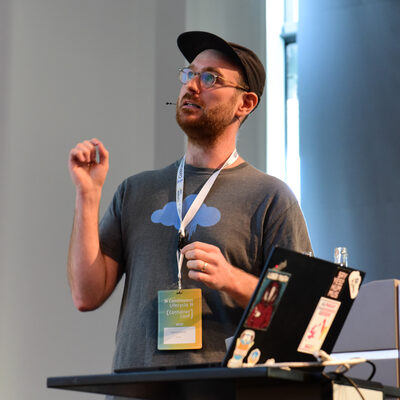
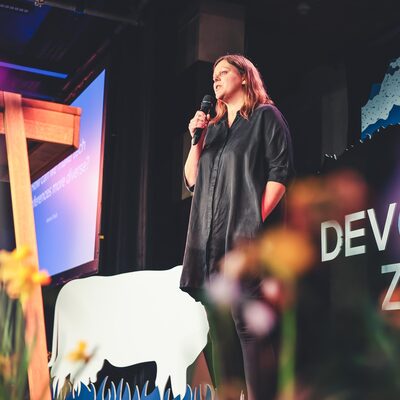
This talk traces the line from Jails and Zones to Docker and Linux containers, and then asks what should be revived for the agentic era. The answer is not nostalgia. It is old ideas rebuilt with new mechanisms: coherent boundaries, runtime policy, and isolation-first design for workloads that no longer know their own edges in advance.
eBPF LSM is one possible way Linux can get there. It matters because it lets policy live close to the kernel boundary while still being programmable at runtime. But the larger point is simpler: the next runtime should not only be easy to use. It should be built for the strange, dynamic, semi-informed workloads we are now creating.